

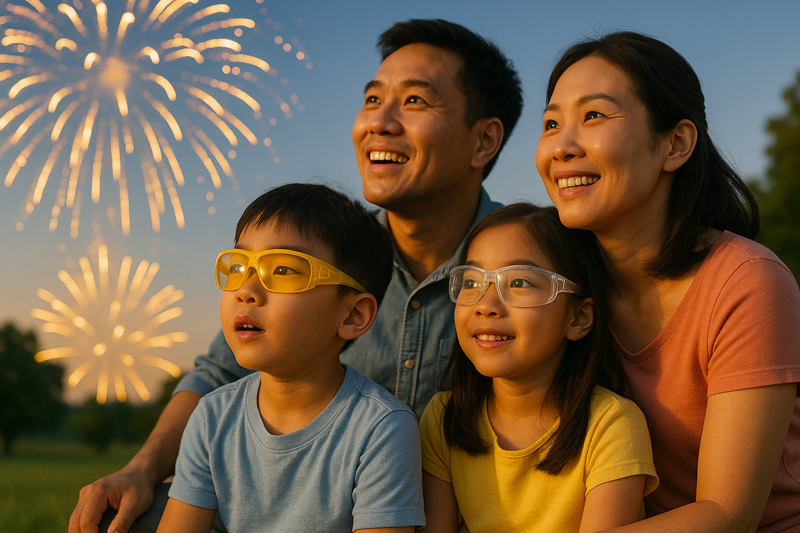
The sparkler glowed inches from your daughter's face, her eyes wide with excitement. For a split second, you saw it tip toward her cheek — then caught her wrist just in time. That near-miss stays with you longer than the fireworks finale. But here's the truth: you don't need a close call to know that July 4th celebrations send thousands of families to emergency rooms every year, many with preventable eye injuries. This summer, arm yourself with the knowledge to keep your family's vision safe — from fireworks burns to UV damage — so the only thing your kids remember is the magic of the celebration.
Table of Contents
Why Fireworks Are One of the Leading Causes of Eye Injuries Each Summer
The month surrounding Independence Day is one of the most dangerous periods for eye injuries in America. According to the U.S. Consumer Product Safety Commission's 2023 report, approximately 9,700 fireworks-related injuries occurred nationwide that year, with a significant concentration of eye injuries during the July 4th period. The data shows that 22% of all fireworks injuries affect the head, face, and ears — and many of those involve the delicate structures of the eye.
What makes fireworks so dangerous to vision? The answer lies in three mechanisms of injury working simultaneously: high-velocity projectiles that can penetrate the eye wall, thermal burns from sparks reaching temperatures above 1,000°F, and chemical exposure from igniters and explosive compounds. Even a small fragment traveling at high speed can cause corneal abrasion, hyphema (bleeding inside the eye), or in severe cases, globe rupture — an injury that often results in permanent vision loss.
What Happens to the Eye During a Fireworks Injury
The eye's protective mechanisms — blinking and tear production — cannot respond fast enough to a fireworks explosion. When a projectile strikes the eye, the impact compresses the globe and can tear the retina, dislocate the lens, or fracture the delicate bones surrounding the eye socket. Burns cause immediate damage to the cornea (the eye's clear front surface) and conjunctiva (the thin membrane covering the white of the eye), leading to scarring that may permanently blur vision. Chemical residue from fireworks can trigger severe inflammation, sometimes causing secondary glaucoma or chronic dry eye.
Why Children Are at Higher Risk
Children under 15 account for a disproportionate share of fireworks eye injuries, and the reasons go beyond simple curiosity. Developmentally, young children lack the motor control and spatial awareness to maintain safe distances from ignited fireworks. Their shorter stature places their eyes closer to hand-held devices like sparklers, and their slower reaction times mean they cannot turn away or shield their eyes quickly enough when something goes wrong.
Perhaps most dangerously, sparklers — often handed to children as the 'safe' fireworks option — burn at approximately 2,000°F, hotter than some blowtorches. A 2023 CPSC analysis found 700 sparkler injuries that year, many involving young children who touched the wire seconds after it went out or waved it too close to their face. The false perception of safety makes sparklers one of the most common causes of pediatric eye burns each July.
One more sobering fact: one-third of fireworks eye injuries occur in bystanders who never handled a firework. Simply standing too close to someone else's display — or being in the path of a misfired device — is enough to cause life-changing damage.
Optometrist-Approved Fireworks Safety Rules for Families
The safest way to enjoy fireworks is to attend a professional display. Municipalities hire licensed pyrotechnicians who follow strict safety protocols, establish barrier zones, and position spectators at distances that make injuries statistically rare. If your family is attending a public show, arrive early to secure a spot in the designated viewing area — never cross barriers to get a closer look, and teach children that the pretty colors are meant to be enjoyed from a distance.
Creating a Safe Viewing Zone for Kids
If you are hosting fireworks at home, create a structured safety perimeter. Designate one responsible adult as the sole handler — someone who is sober, calm, and familiar with the devices being used. Establish a spectator zone at least 35 feet away from the launch area, and mark it clearly with cones, tape, or chairs. Children should remain in this zone at all times, with a supervising adult who is not distracted by a phone or conversation.
- Protective eyewear for handlers: Anyone lighting fireworks should wear ANSI-approved safety glasses with polycarbonate lenses — not sunglasses, which provide no impact protection.
- Alcohol-free zone: Impaired reaction time increases injury risk. If you are drinking, you are not handling fireworks.
- Water on standby: Keep a bucket of water or a running hose within arm's reach. Never attempt to relight a dud; wait 20 minutes, then soak it thoroughly before disposal.
- Read instructions in daylight: Fumbling with instructions in the dark while holding a lighter is a recipe for disaster.
Why Sparklers Aren't the 'Safe' Option Parents Think They Are
Sparklers account for hundreds of emergency-room visits every July, and most involve children under 10. The wire remains dangerously hot for several minutes after the sparks stop — long enough for a curious toddler to grab it and sustain a second-degree burn near the eye. Even while lit, sparklers are easily waved too close to a sibling's face or dropped onto bare feet, causing burns that are difficult to treat and prone to infection.
The alternative? Glow sticks, LED wands, and battery-powered light toys give children the visual excitement they crave without the burn risk. Opt for these safer options, and save the sparklers for the adults — or skip them entirely.
What to Do If a Fireworks Eye Injury Happens
Despite your best precautions, accidents happen. Knowing how to respond in the first 60 seconds after an eye injury can make the difference between full recovery and permanent vision loss. The cardinal rule: do not touch the eye. Do not rub it, do not press on it, and do not attempt to remove any object that may be embedded in the tissue.
First-Aid Do's and Don'ts
Do: Shield the eye loosely with a rigid object like a paper cup taped gently over the brow and cheekbone — this prevents accidental pressure while you seek help. Keep the injured person calm and still; movement can worsen internal damage.
Do: Call 911 if there is visible penetration of the eyeball, heavy bleeding, sudden vision loss, or severe pain that does not subside. These are surgical emergencies.
Do: Head directly to an emergency eye care provider if the injury involves a burn, chemical exposure, or significant impact but does not meet the 911 criteria. Time is critical; call ahead so the clinic can prepare.
Do not: Rinse the eye with water unless you suspect chemical exposure (in that case, flush gently with clean water for 15 minutes while en route to care). Water can introduce bacteria or worsen certain injuries.
Do not: Apply ointments, eye drops, or ice directly to the eye. These can seal in contaminants or cause further tissue damage.
Do not: Give aspirin or ibuprofen immediately after the injury — both thin the blood and can increase intraocular bleeding. Acetaminophen is safer for pain relief until a doctor evaluates the injury.
Even if the injury seems minor — a small scratch, brief pain that fades, or redness without obvious trauma — schedule an urgent eye exam within 24 hours. Some of the most serious fireworks injuries, including retinal detachment and intraocular foreign bodies, do not produce immediate symptoms. Golden Vision Optometry offers emergency eye care across our nine California locations; call us immediately if you or a family member sustains any eye injury this July 4th.
Beyond Fireworks: Summer Eye Protection Essentials
Fireworks injuries are dramatic, but summer's everyday hazards — UV radiation, chlorine, windblown debris — pose quieter, cumulative risks to your family's vision. The good news: these are even easier to prevent than fireworks burns, and the protective habits you build now will serve your children for a lifetime.
Choosing the Right Sunglasses for Your Child
Not all sunglasses are created equal. Fashion sunglasses without UV protection actually do more harm than good — they dilate the pupil in dim light, allowing more ultraviolet radiation to reach the retina. Look for labels that specify 100% UV400 protection or blocks 99-100% of UVA and UVB rays. Wraparound styles provide the best coverage, shielding the eyes from light entering at the sides.
Children need sunglasses just as much as adults do — arguably more, since their larger pupils and clearer lenses transmit more UV to the retina. Cumulative UV exposure over a lifetime increases the risk of cataracts, macular degeneration, and even ocular melanoma. Start the sun-protection habit early: if your toddler wears a hat outdoors, they should wear sunglasses too.
- Fit matters: Sunglasses that slide down the nose or fall off during play will end up in a beach bag, not on your child's face. Invest in a strap or adjustable frames designed for active kids.
- Polarization is a bonus: Polarized lenses reduce glare from water, sand, and pavement, making it easier to see clearly during outdoor activities. They do not add UV protection, but they improve comfort and safety.
- Replace scratched lenses: Deep scratches scatter light and reduce clarity. If your child's sunglasses are visibly damaged, replace them before the next sunny outing.
Pool and Beach Eye Safety Tips
Chlorine irritation: Pool water treated with chlorine can disrupt the eye's tear film, causing redness, burning, and temporary blurred vision. Prescription or non-prescription swim goggles create a watertight seal that keeps chlorine out. If your child complains of stinging eyes after swimming, rinse with clean water and apply preservative-free artificial tears to flush residual chemicals.
Saltwater and surf: Ocean water contains bacteria and organic debris that can cause infections, especially if your child rubs their eyes with sandy hands. Rinse eyes with bottled water after beach play, and pack a small bottle of saline solution in your beach bag.
Dry eye and wind: Hot, windy summer days evaporate tears faster than your eyes can replace them, leading to dryness, redness, and a gritty sensation. Encourage your family to blink more often during outdoor activities, stay hydrated, and use lubricating eye drops if discomfort persists. Wraparound sunglasses also act as a windbreak, reducing tear evaporation.
Golden Vision Optometry locations in Arcadia, Irvine, San Diego, San Francisco, Cupertino, Dublin, Rowland Heights, San Gabriel, and Milpitas offer comprehensive pediatric eye exams and specialty lens fittings for active summer lifestyles. If your child needs prescription swim goggles, sports eyewear, or high-performance sunglasses, our bilingual English/Mandarin team can help you find the perfect fit.
Most important takeaway:
Prevention beats treatment every time. A $20 pair of certified sunglasses or a simple rule about sparkler distance can spare your family an emergency-room visit — and protect vision for decades to come.
Common Questions About Fireworks and Summer Eye Safety
Can fireworks injuries cause permanent vision loss?
Yes. Severe fireworks injuries can result in permanent vision loss or even loss of the eye itself. Injuries that rupture the globe, cause retinal detachment, or severely burn the cornea often leave lasting damage that cannot be fully repaired, even with surgery. This is why prevention is so critical — once the injury occurs, the outcome is often irreversible.
Are sparklers really that dangerous for kids?
Absolutely. Sparklers burn at approximately 2,000°F — hot enough to melt some metals — and remain dangerously hot for minutes after the sparks stop. Hundreds of children are injured by sparklers each year, with burns to the hands, face, and eyes being the most common. The false perception that sparklers are safe makes them one of the leading causes of pediatric fireworks injuries.
What should I do if my child gets a sparkler burn near their eye?
First, move them away from the fireworks and any other heat sources. Do not touch the burn or apply ice directly to the skin. Shield the eye loosely with a clean cloth or rigid cup if the burn is very close to the eye, and seek immediate medical care. Burns near the eye can cause swelling that affects vision, and even minor-looking burns may require prescription treatment to prevent infection and scarring.
Do I need special sunglasses for my toddler, or will any sunglasses work?
Not just any sunglasses will protect your toddler's eyes. You need sunglasses that block 99-100% of UVA and UVB rays (look for a label that says UV400 or 100% UV protection). Fashion sunglasses without UV blocking can actually increase UV exposure by dilating the pupil in dim light. Choose wraparound styles that fit snugly and stay on during active play — a strap helps for younger children who tend to pull glasses off.
Before your family heads out to celebrate this July 4th, schedule a comprehensive eye exam at Golden Vision Optometry. Our nine California locations — Arcadia, Cupertino, Dublin, Irvine, Milpitas, Rowland Heights, San Diego, San Francisco, and San Gabriel — offer same-week appointments, bilingual English/Mandarin service, and pediatric eye care to keep your family's vision healthy all summer long. Call us or book online today.
Medical Disclaimer: This content is for informational purposes only and does not constitute medical advice, diagnosis, or treatment. Always seek the advice of your eye care professional or other qualified health provider with any questions you may have regarding a medical condition. Never disregard professional medical advice or delay seeking it because of something you have read on this website.